LAGOS, NIGERIA — HOTSOURCE News Exclusive Report

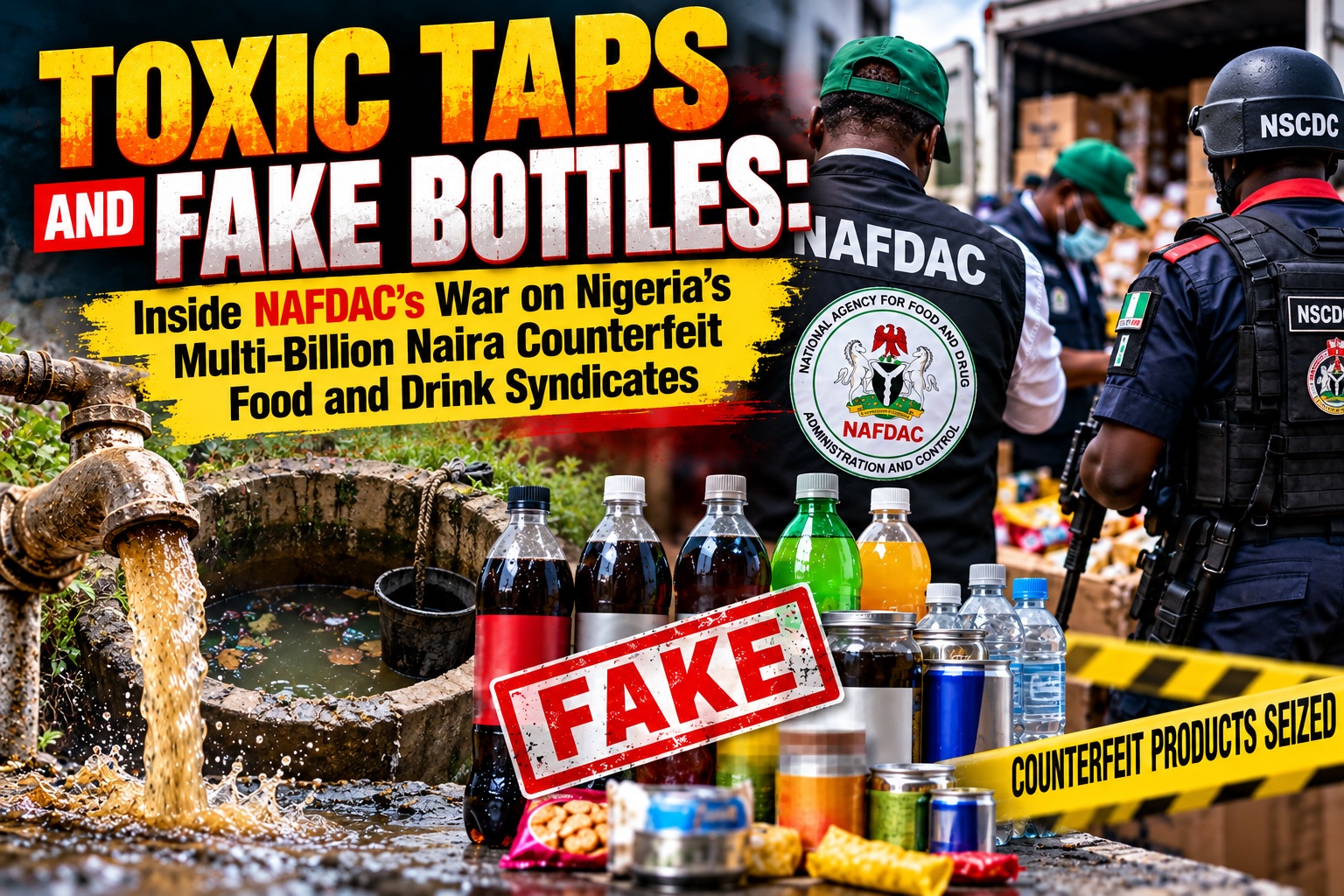
From the bustling open-air corridors of Lagos’s Ojuwoye Market to the cramped, chemical-scented alleyways of Port Harcourt’s Diobu district, a deadly, silent threat stalks Nigerian consumers. In what has rapidly evolved into one of the country’s most pressing public health emergencies, regulatory and security agencies have expanded their frontline war against sophisticated criminal syndicates mass-producing adulterated food, water, and premium beverages.
A series of dramatic, high-stakes raids executed by the National Agency for Food and Drug Administration and Control (NAFDAC) and the Nigeria Security and Civil Defence Corps (NSCDC) has pulled back the curtain on a terrifying underground industry. It is a multi-billion Naira empire built on industrial dyes, untreated well water, raw ethanol, and forged registrations.
The Badagry Horror: Real Profits, Zero Fruit
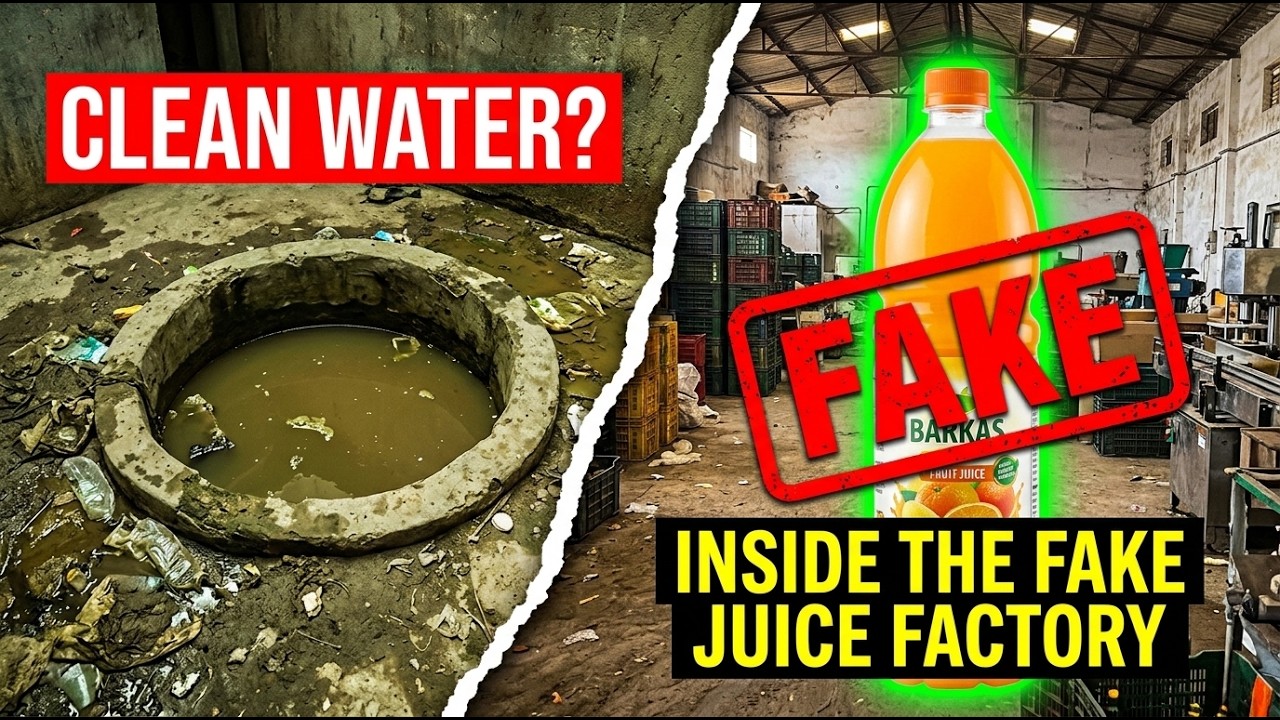
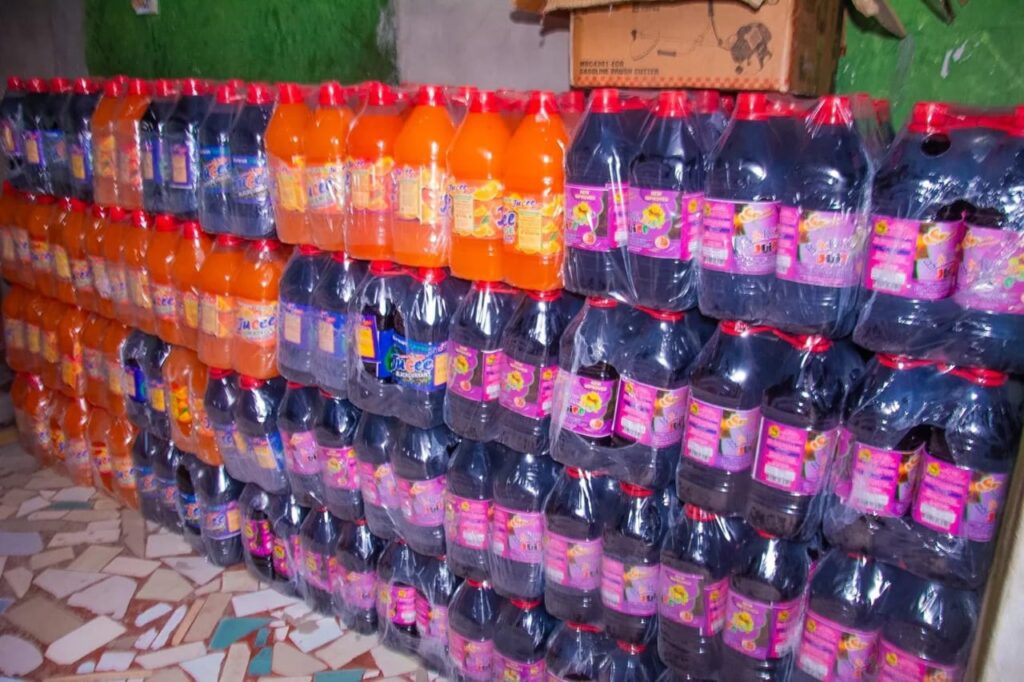 Perhaps the most shocking exposure occurred in Aradagun, a suburb of Badagry, Lagos State. Following five days of intense, round-the-clock surveillance, NSCDC operatives stormed a heavily fortified, unregistered facility. What they uncovered was a production line masquerading as a legitimate beverage company, distributing a product branded “Barkas Juice”.
The facility had operated undetected for years under the guise of a water production venture. Upon closer inspection, enforcement officers discovered that the facility used absolutely no agricultural fruit. Instead, operators pumped untreated water from a highly contaminated well and mixed it with lethal doses of industrial sugar, synthetic flavourings, artificial colourants, and unapproved chemical preservatives.
To perfect the illusion, the syndicate printed a counterfeit NAFDAC registration number (01-2166L) directly onto the packaging labels. At the time of the bust, a distribution truck was already loaded with crates destined for unsuspecting vendors in Lagos, Edo State, and Benin City. The raid also exposed a darker humanitarian crisis within the factory walls: operators were using enslaved minors aged 15 and 16 to run the toxic production lines.
Port Harcourt’s Counterfeit Spirit Ring
 The poisoning of the supply chain is not isolated to the South-West. Hundreds of kilometres away in the Niger Delta, residents of Port Harcourt raised the alarm over a pungent, chemical stench emanating from a shop on Emenike Street, deep within the Mile 3 Market area of Diobu.
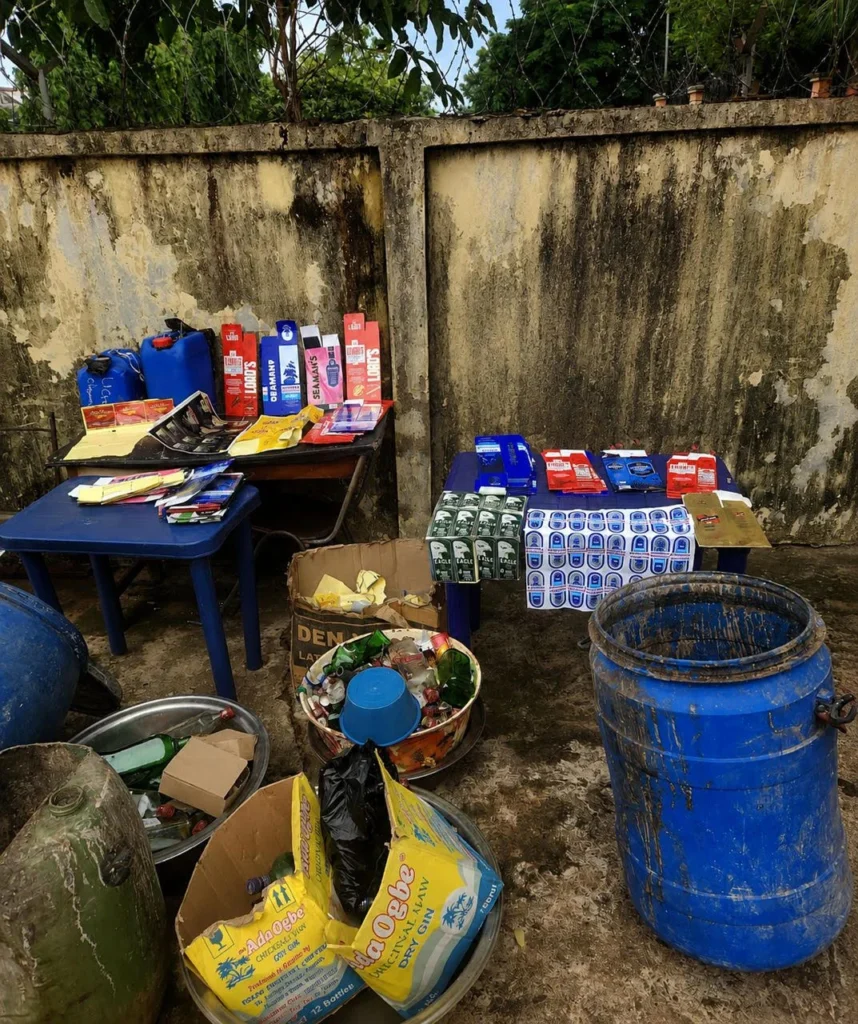
A joint raid intercepted 52-year-old Anthony Chidi red-handed in a filthy, makeshift laboratory. Chidi’s operation relied on scavengers who combed dumpsites for discarded glass bottles of popular spirit brands. In unhygienic washbasins, these bottles were scrubbed, rinsed, and refilled with a highly volatile mixture of industrial-grade raw ethanol, tap water, and chemical colourants.
Investigators revealed that Chidi specialised in forging everyday household spirits, including Lord’s Gin, Squadron Dark Rum, and Seaman’s Schnapps. His operation highlighted a highly organised interstate network; Chidi confessed to sourcing his expertly forged caps, labels, and branded cartons directly from manufacturing hubs in Aba, Abia State, before assembling the deadly products locally for distribution across Rivers State bars and local markets.
The Epicentre: The Aba Cartel and Warehouses Uncovered
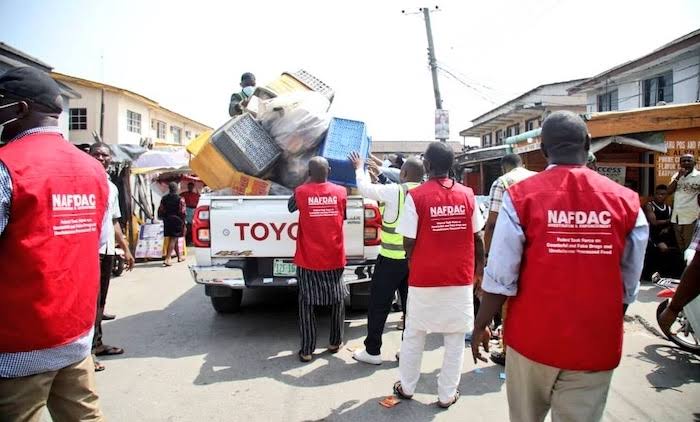 Further cementing the interstate network of these networks, Aba, Abia State, has emerged as a major focus for federal regulators. In extensive enforcement sweeps dubbed Operation Clean Up Aba, NAFDAC stormed the notorious Cemetery Market (Eziukwu Market) and surrounding villages like Osisioma Ngwa.
The raids dismantled a massive, highly organised beverage cartel operating over 240 illegal mini-factories. Operators were caught falsifying everything from premium champagnes and foreign wines to local soft drinks. Beyond drinks, NAFDAC uncovered multiple warehouses stocked with expired, re-labelled, and falsified medications—including altered expiry dates on critical allergy medications, immune boosters, and antibiotics. The sheer scale of the Aba operation resulted in the seizure and destruction of substandard goods valued at over ₦750 million in single market sweeps.
Beyond Alcohol: The Threat Extends to Everyday Staples
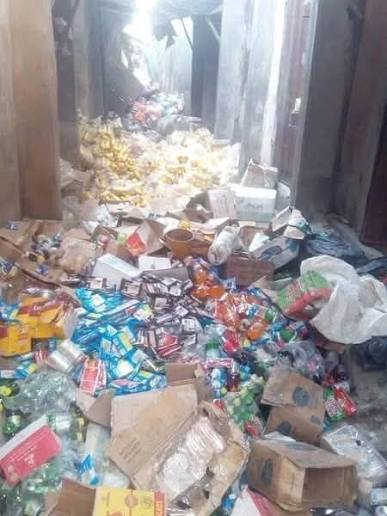 Public health officials warn that the crisis has mutated. While fake alcohol historically dominated the counterfeit sector, syndicates have aggressively shifted into everyday essentials.
In Abuja and Lagos, NAFDAC issued urgent public alerts after seizing massive quantities of counterfeit ORACARE+ Toothpaste alongside sophisticated operations dedicated to repackaging cheap, unrefined cooking oil into premium brand containers. Worse still, regulators intercepted commercial transport tankers, previously used to haul crude diesel, being used to transport edible vegetable oil without any decontamination—chemically poisoning staples before they even reach open markets.
The Double Whammy: Economic Hardship and Rising Mortality Rates
 The terrifying surge in counterfeit operations is directly fueled by Nigeria’s gruelling economic hardship. As soaring inflation, high production costs, and weakened purchasing power push original, certified brands out of reach for the average citizen, a desperate market gap has widened. Counterfeiters exploit this vulnerability, packaging slow-acting poisons as “affordable alternatives” to maximise financial gain with total disregard for human life.
The human cost of this economic desperation is devastatingly measurable. Medical practitioners across Nigeria are reporting a sharp, unprecedented rise in mortality rates directly linked to the ingestion of these toxic commodities. The chemical dyes, industrial sugars, and toxic ethanol mixtures being funnelled into Nigerian homes are triggering a national health crisis, characterised by sudden organ destruction, permanent kidney damage, acute liver failure, and premature death.
Consumer Alert: What to Watch Out For and What to Do
With counterfeiters utilising high-end digital printing to clone authentic packaging, NAFDAC is urging absolute vigilance. To protect yourself and your family, always check for these red flags:
-
- Inspect the Printing and Packaging: Look closely at product labels. Counterfeit goods often feature blurry text, faded logos, uneven security seals, or scratched-out and stamped-over expiry dates.
-
- Verify NAFDAC Numbers and MAS Codes: Genuine products carry valid NAFDAC registration numbers. Where available, utilise the Mobile Authentication Service (MAS) scratch codes on packaging to verify product authenticity instantly via a free SMS.
-
- Analyse the Price and Location: If a premium spirit, cooking oil, or consumer good is being sold significantly below market value or in an unusual, unhygienic environment, assume it is counterfeit.
-
- Trust Your Senses: If a familiar brand of food, water, or drink smells, tastes, or looks unusual (such as strange sediment in a bottle), stop consumption immediately.
WHAT TO DO: If you uncover an illegal factory, purchase a suspected fake product, or notice a vendor altering expiry dates, do not confront the operators. Immediately report the details, location, and product batch to the nearest NAFDAC office or call the official consumer safety hotlines at 0700-1-NAFDAC.