
Abuja Breathes Again: The Woman, the Movement, and the Clean Air Revolution in Nigeria

Abdulrahman Aliagan

When Dr. Adedolapo Fasawe walks into a room, she does not simply appear—she transforms the atmosphere. Her presence radiates the warmth of empathy and the precision of a scientist, the firmness of a reformer and the compassion of a healer. 

A physician by training and an environmental strategist by destiny, Dr. Fasawe—now the Mandate Secretary of the FCT Health and Environment Secretariat—embodies a philosophy that has become the soul of a national awakening: environment is life. When it fails, healthcare fails. When it collapses, society collapses. And when it is ignored, hope itself begins to suffocate.

This conviction led to one of Nigeria’s most ambitious public health and environmental transformations: Project Breathe Clean Air Abuja. The movement did not begin in a boardroom but with a simple domestic discomfort—a father inhaling the sharp fumes of charcoal incense inside his Abuja home. If something so small irritated him, what of the millions of Nigerian women who inhale dense smoke while cooking? 

What of infants strapped to their mothers’ backs, inhaling toxins before they speak their first words? That relatable discomfort inspired a far-reaching realization about Nigeria’s hidden epidemic: household air pollution, the silent killer in smoky kitchens across the country.

This realization converged at the newly unveiled Bola Ahmed Tinubu International Conference Centre in Abuja, where the Federal Capital Territory Administration, under the leadership of Minister Nyesom Ezenwo Wike and supported by the political vision of President Bola Ahmed Tinubu, launched a historic clean-cooking and clean-air transition initiative.

 The programme, powered by the strong partnership of IHS Nigeria, immediately stood out not as another government pronouncement but as a turning point in Nigeria’s fight against respiratory diseases, environmental degradation, rising cancer prevalence, poverty induced by energy costs, and the gender inequities long embedded in traditional cooking methods.

To understand the fire behind this movement, one must trace Dr. Fasawe’s path back to Ile-Ife, where she was raised under the gentle firmness of a mother whose discipline shaped her academic and moral foundation. Her journey through Obafemi Awolowo University Staff School, Federal Government Girls College Ido-Ani and Obafemi Awolowo University—where she earned her MBBS with distinction—instilled her with the excellence, order and empathy that now define her leadership. 

Further studies at Lagos State University, the Liverpool School of Hygiene & Tropical Medicine, King’s College London, and the University of Cambridge expanded her mastery of public health, international health consultancy, mental health, and circular economy strategies.

As a young clinician, she discovered that most patients in the hospital suffered not from unavoidable ailments but from preventable conditions created by failing environments. This insight compelled her to step beyond hospital walls into the broader arena where health and environment intersect. 

Her transformative leadership in Lagos, especially at LASEPA, turned environmental regulation into a people-centered movement, proving that waste could become wealth, that data could become policy, and that public health could not exist without environmental justice. Today, she brings that clarity, courage and innovation to the FCT.

The launch of Project Breathe Clean Air Abuja unfolded as a national spectacle of urgency and hope. The FCTA announced its plan to distribute 5,000 LPG cylinders—each accompanied by six months of free refills—to households across the six area councils. This initiative, designed to replace firewood and charcoal with safer alternatives, aims to combat the staggering reality that over 120 million Nigerians still rely on smoky biomass fuels. 

The World Health Organization estimates that 3.2 million people die annually from household air pollution, with Nigerian women and children carrying the heaviest burden. Against this grim backdrop, the launch became a declaration that Nigeria is done cooking with death.

FCT Minister Nyesom Wike’s political will elevated the initiative from a concept to a coordinated intervention. His support aligned the programme with President Bola Ahmed Tinubu’s Renewed Hope Agenda, which prioritizes environmental sustainability, improved living standards, and energy transition. 

The Permanent Secretary of the FCT Health Services and Environment Secretariat, Dr. Babayena Adams, underscored the economic implications, affirming that healthier households are more productive and that environmental protection directly strengthens the FCT’s GDP. He emphasized that beneficiary selection covered women, men, persons with disabilities and vulnerable groups, ensuring inclusivity and fairness.

From the private sector came a powerful reinforcement. Mohammed Darwish, the CEO of IHS Nigeria, described the initiative as life-changing, particularly for the women and children constantly exposed to toxic kitchen smoke. He reminded the audience that beyond the cylinders lies the real value: helping families breathe again and escape the silent dangers of traditional cooking fuels. His colleague, Ayotade Oyinlola, Executive Vice-President of IHS Nigeria, highlighted the economic relief the programme would bring, as cleaner cooking dramatically reduces medical expenses and improves overall household well-being.

Medical experts deepened the urgency. Dr. Ayuba Usman, Consultant Radiation and Clinical Oncologist at the National Hospital Abuja, warned that clean cooking is one of the most effective preventive interventions against respiratory diseases and cancer. 

His insights echoed the critical question raised by cancer prevention specialist Dr. Ramatu Usman: Why are more women who never smoked dying from lung cancer? The answer, she said, is found not in cigarettes but in smoky kitchens where firewood burns daily. With cancer treatment costing as much as ₦7 million monthly, prevention becomes not only lifesaving but economically essential.

The National Assembly’s presence at the event transformed the project from aspiration to policy. Hon. Dr. M. A. Oriyan, Chairman of the House Ad-hoc Committee on FCT Health, issued a directive that reverberated across the hall: the 2026 national budget must not be presented without provisions for this programme. With that pronouncement, clean air moved from advocacy to legislation, from speech to enforceable national agenda.

As environmental groups, development partners, student associations and community-based organisations applauded the initiative, a moment of pure hope emerged when a child poet, Isabella, took the stage. Her soft but resolute voice carried a message that captured the soul of the movement: “Abuja, our hope will breathe again—free from smoke, free from pain.” The hall erupted. In her youthful words, the future found its innocence—and its courage.

The climax of the event came when LPG cylinders were handed to women from all six area councils, symbolizing not just distribution but liberation: liberation from respiratory disease, from economic strain, from deforestation-driven environmental decline, and from generations of smoky kitchens. It marked the beginning of what promises to be one of the most transformative clean-energy interventions in modern Abuja.

Yet, despite the scale of the celebration, Dr. Fasawe remains grounded. She continues to mentor young women, uplift communities, and preach the values of recycling, sustainability and environmental stewardship. Her belief that “everybody’s waste is somebody’s raw material” reflects a worldview that sees potential where others see problems, and solutions where others see obstacles.

The vision ahead is bold: a Nigeria where every household cooks safely; where children breathe clean air without fear; where environmental education becomes instinctive; where green corridors shape cities; where waste becomes industry; and where clean energy is accessible to all. But Dr. Fasawe warns that environment has no boundaries. If Abuja succeeds and Nasarawa fails, she says, the nation has not won. Clean air must spread from the FCT to all 36 states.

Today, Abuja stands not only as the political capital of Nigeria but as a rising Environmental Capital of Africa—an emerging model of modern public policy, compassionate leadership and sustainable innovation. At the heart of this transformation stands a woman who treats not only the human body, but the breathing soul of a city; a leader who understands that the fight for clean air is the fight for life itself.

Nigeria is breathing again. Abuja is leading. And the future—at last—smells clean.

*Aliagan wrote in from Abuja. 

​  

  • Related Posts

    As Agbeyewa Farms Targets Bigger Share of $3.65bn Cassava Market

    As Agbeyewa Farms Targets Bigger Share of $3.65bn Cassava Market

    Raheem Akingbolu writes on  how a new Memorandum of Understanding  between the National Agricultural Land Development Authority  and Agbeyewa Farms could  drive industrial production, boost exports, and strengthen food security through the $3.65 billion cassava market

    When President Bola Tinubu took office in 2023, his administration identified the need to move beyond oil and gas to secure long-term economic stability. Years of reliance on crude revenues had exposed the country to price shocks and global energy shifts, making diversification not just desirable but essential.

    To confront this, the government adopted a dual-track approach: extracting maximum value from the oil and gas sector while aggressively broadening the economy through investments in renewable energy, gas utilization, solid minerals, and wider economic reforms.

    Agriculture quickly emerged as a pivotal pillar in this strategy. Beyond food supply, the sector offered a pathway to foreign exchange earnings, reduced import pressure, and a stronger currency. In the past two years, the administration has pursued measures such as advancing technology, scaling processing capacity, and tackling systemic issues like land titling to attract investment and promote mechanization; all aimed at repositioning agriculture as a viable industrial and export engine.

    In a major stride toward transforming Nigeria’s agricultural landscape, the National Agricultural Land Development Authority (NALDA), recently signed a groundbreaking Memorandum of Understanding (MoU) with Agbeyewa Farms, a partnership set to redefine the nation’s cassava value chain and accelerate industrial-scale production.

    The MoU signing ceremony held in Abuja, brought together key government officials, industry stakeholders, development partners, and private sector leaders in a strong show of commitment to agricultural transformation.

    Speaking at the event, Executive Secretary of NALDA,  Cornelius Olusegun Adebayo,  reaffirmed the agency’s strategic drive to support private sector-led agricultural expansion under President Bola Ahmed Tinubu’s Renewed Hope Agenda.

    He recalled that his initial visit to Agbeyewa Farms in Ekiti State in 2024 was a defining moment that influenced NALDA’s decision to prioritize cassava as a critical focus crop and partnership with Agbeyewa Farms.

    “Our conviction to partner with Agbeyewa Farms is anchored on the clear capacity of their investment, the scale of their operations, and the size of the farms. These factors validate our belief that Agbeyewa Farms is not just the largest cassava farm in Nigeria, but indeed the largest in Africa.”
    “We have moved beyond producing raw cassava quantities. The next phase for Nigeria is capturing the global market and this partnership is a key direction towards achieving that mark.”

    He further announced that under the MoU, NALDA will clear an additional 5,000 hectares of land to support Agbeyewa’s large-scale cultivation drive, secure raw material availability for processing, and deepen industrial sector participation.

    “Government has no business in running businesses. Rather, government should enable businesses to thrive. With Agbeyewa, we are building a model that proves that the private sector, supported with the right policies and legislations, can scale faster, bigger, and more sustainably,” he added.

    In his remarks, Mr. OSKA Seyi Aiyeleso, Managing Director and Chief Executive Officer of Agbeyewa Farms, expressed deep appreciation to NALDA for translating months of strategic engagement into a formal alliance that will reshape Nigeria’s agricultural future.

    He reflected on Agbeyewa’s bold growth trajectory, disclosing that the company has already cultivated over 3,000 hectares of cassava, with expansion plans to reach 5,000 hectares by the end of 2025.

    “Agbeyewa Farms is today the largest cassava farm in Africa. With this collaboration, we are positioned to become the largest in the world. This is not just growth; it is transformation. This is not just farming, this is industrial repositioning.”

    Aiyeleso added that Agbeyewa’s operating model is anchored on four core pillars — cultivation, aggregation, agro-processing, and agro-training, driven by full mechanisation. He also reaffirmed the company’s commitment to economic empowerment, revealing that its workforce has now grown to over 2,000 direct jobs, with thousands more supported across its value chain.

    Both leaders applauded President Tinubu for championing reforms that strengthen private sector participation, unlock investment, and remove systemic barriers to growth.

    Delivering the technical framework for the partnership,  Technical Adviser to NALDA,  Mathew O. Owolabi, described the MoU as a strategic collaboration designed to share resources, mitigate operational risks, strengthen transparency, and unlock long-term institutional value for Nigeria’s agricultural economy.

    Observers believe that this development is still in line with the Tinubu administration’s approach to the sector’s growth, which focuses on food security through a combination of declaring a state of emergency, mechanization programs, and financial support for farmers. Key initiatives include the launch of the National Agricultural Development Fund (NADF), distributing 2,000 tractors and other implements, and implementing the Nigerian Farmers Soil Health Scheme. The administration has also partnered internationally, created the Ministry of Livestock Development, and is working to boost dry season farming.
    Meanwhile, stakeholders in the agric sector have expressed optimism about the transformation that is expected to take place in Nigeria’s cassava industry in the near future.

    This position was expressed during a workshop organised early this year, by Cavista Holdings and Agbeyewa Farms which was held at Ikogosi Warm Springs Resort, Ekiti State.

    The event, held just a day after Abubakar Kyari, Minister of Agriculture’s visit to Agbeyewa Farms, brought together representatives from Cavista Holdings, Agbeyewa Farms, the Nigeria Agricultural Development Fund (NADF), Nigeria Cassava Industrialisation Alliance (NCIA) and the Lagos Business School (LBS) among others.

    The Chief of Staff to the Ekiti State Governor,    Niyi Adebayo,    represented the state government and highlighted ongoing initiatives to boost cassava production and agribusiness development.

    Adebayo outlined the government’s land-clearing initiative, which has opened 5,000 hectares for young farmers adding that the state has introduced mechanization and agribusiness programs for over 3,000 youth, aligning with national goals to increase agricultural productivity and employment.
    During the workshop, stakeholders engaged in in-depth discussions on agricultural financing, mechanisation, logistics efficiency, and value addition, all geared toward positioning Nigeria as a leader in cassava processing.

    A lecturer at Lagos Business School, Doyin Salami, emphasised that farmer aggregation is critical to unlocking financing and improving productivity. By organising smallholder farmers into structured groups, access to credit, mechanisation, and technical support can be significantly improved.
    Also speaking, Head of Partnerships, at NADF), Nasir Ingawa,   stated that limited access to financing remains one of the biggest barriers to productivity and industrial-scale processing.

    Ingawa said to bridge this gap, NADF would work to develop tailored financing solutions that will enable smallholder farmers and agribusinesses to scale operations, adopt modern agricultural practices, and integrate into larger value chains.

    The workshop concluded with a commitment to concrete action plans across four key areas: strengthening farmer aggregation which involves developing structured out grower models to increase financing access, mechanisation adoption, and productivity.

    It commits to scaling up processing infrastructure i.e mobilising investment for industrial-scale processing plants to expand cassava’s value-added potential.
    There are also plans of improving logistics and market access that is, addressing inefficiencies in storage and transportation to reduce post-harvest losses.
    Another thing is policy and investment facilitation which involves engaging policymakers and financial institutions to create an enabling environment for cassava industrialization.

    “The Cavista Holdings-led workshop has set a clear path forward for transforming Nigeria’s cassava industry,” the company said in a statement.
    “With continued investment and policy support, Nigeria is well-positioned to become a leader in cassava processing, unlocking billions in economic value, creating jobs, and strengthening food security,” it added.

    For Agbeyewa farms Limited, the recent feat was not by accident. In 2024, the company unveiled an ambitious 12-point agenda designed to transform cassava farming and address food insecurity.

    The agenda was made public during a presentation to a high-level delegation from the U.S. Agency for International Development (USAID) during a working visit to the farm on December 2, 2024.

    Unveiling the blueprint document, the Director of Strategy for Cavista Holdings (parent company of Agbeyewa Farms), Kabir Shagaya, explained that this 12-step plan builds on the successful signing of an MOU between the company’s chairman, Niyi John Olajide and the Ekiti State Governor, Biodun Oyebanji in May 2024 to establish a state-of-the-art cassava farm covering 100,000 hectares within the state.

    This initiative is to be delivered through an in-grower/out-grower cooperative programme where eligible farmers will be organized into cooperatives of 100-150 members, each managing a 500-hectare plot.

    According to Shagaya, “This programme is expected to impact 1,500 farmers across 10 cooperatives, benefiting approximately 7,500 individuals, including families, thereby supporting local communities and fostering economic growth and scalability.”

    Shagaya also revealed an investment plan for international donors, like USAID and the United States African Development Foundation (USADF), to join their programme and support various aspects of their operations, such as farmer integration, infrastructure costs, initial operational needs, training, cooperative operations, and market integration through off-taker arrangements, all aimed at significantly reducing post-harvest losses.

    Other highlights of the company’s plans include: massive land clearing and preparation for 2025 farming season in partnership with NALDA), extensive farmer training through its in-house Training Academy, and the development of an Agbeyewa Model Town (consisting residential units, schools, healthcare facilities, recreational spaces, and Bus Rapid Transit (BRT) logistics for transportation within and outside the community).

    The USAID Team, comprising Xavier Preciado (Senior Agriculture Advisor), Susan Oranye (Project Management Specialist; Private Sector Engagement) and Grace Bojuto (Manager/Executive Assistant to the Mission Director) expressed their admiration for the high level of expertise, professionalism, and technology employed by the Agbeyewa team. 

    ​  

    Raheem Akingbolu writes on  how a new Memorandum of Understanding  between the National Agricultural Land Development Authority  and Agbeyewa Farms could  drive industrial production, boost exports, and strengthen food security

    Read more

    CISLAC Engages Lawmakers on Climate Accountability, Fiscal Reform as Nigeria Confronts Fossil Fuel Dependence

    CISLAC Engages Lawmakers on Climate Accountability, Fiscal Reform as Nigeria Confronts Fossil Fuel Dependence

    Chiemelie Ezeobi

    The Civil Society Legislative Advocacy Centre (CISLAC) has intensified pressure on federal lawmakers to champion stronger climate governance, fairer fiscal regimes, and an accelerated clean energy transition, as Nigeria confronts deepening environmental and economic vulnerabilities linked to fossil fuel dependence.

    This formed the core of discussions at a landmark policy dialogue convened by CISLAC at the Sheraton Hotel, Ikeja, where legislators, civil society leaders, and policy stakeholders examined the legislative reforms needed to steer Nigeria toward renewable energy adoption, climate resilience, and equitable economic growth.

    Speaking on behalf of the Speaker of the House of Representatives, Rt. Hon. Tajudeen Abbas, Hon. Akin Rotimi said the engagement was “timely and strategic,” aligning with the National Assembly’s Legislative Agenda (2023–2027). 

    He highlighted ongoing priorities, including strengthening NESREA, enforcing the Climate Change Act, fast-tracking renewable energy deployment, reducing gas flaring, and restoring polluted communities.

    Rotimi stressed Parliament’s responsibility in shaping fiscal incentives that encourage the transition without undermining livelihoods. “The transition must empower, not exclude. We must protect workers who depend on traditional energy value chains,” he said.

    CISLAC’s Executive Director, Auwal Ibrahim Musa (Rafsanjani), who set the tone for the dialogue, said the conversation was rooted in climate responsibility, resource governance, and Africa’s evolving energy landscape. He acknowledged lawmakers, committee chairpersons, clerks, APNIFFT leadership, civil society organisations, and the media.

    Rafsanjani warned that Nigeria’s long-standing reliance on fossil fuels is increasingly untenable, given mounting climate threats and global momentum toward decarbonisation. “This conversation could not be more timely. Nigeria stands between its long-standing dependence on fossil fuels and the imperative to pursue a cleaner, more resilient, and economically inclusive future.”

    He emphasised the centrality of the Nigeria Energy Transition Plan (ETP), which targets net-zero emissions by 2060, but noted that its success depends on strong fiscal reforms, transparent taxation systems, and incentivised capital inflows into renewable and transition fuels.

    Despite being Africa’s largest economy, he observed that Nigeria remains energy-insecure, with renewable penetration still below 10 per cent, leaving millions exposed to electricity shortages, pollution, and environmental risks.

    Rafsanjani applauded progress made through the Climate Change Act of 2021, which established the National Council on Climate Change and mandated a Climate Action Plan, but insisted that real change depends on implementation.

     “The Legislature has gone beyond establishing the frameworks, it must ensure effective implementation, transparency, accountability, and mobilize climate financing.”

    He criticised fiscal regimes that offer tax holidays to fossil fuel enterprises, warning that such incentives often work against public interest. 

    He urged lawmakers to redirect fiscal instruments to decarbonisation pathways that drive divestment from high-emission assets; expand access to transition fuels such as natural gas; stimulate investment in solar, wind, hydrogen and other clean technologies; safeguard national revenue; and ensure equitable transition outcomes for disadvantaged communities.

    In a notable intervention, Rafsanjani flagged intra-African mobility barriers as a major impediment to regional climate progress. He cited repeated visa challenges faced by researchers, activists, and innovators attending African climate summits. 

    “Energy transition is not only a technical matter, it is a question of access, mobility, and African solidarity. When African citizens cannot travel to African countries, we weaken the momentum of regional cooperation.” He urged parliamentarians to push for continental mobility reforms necessary for a just transition.

    Hon. Oluwole Oke warned that international developments suggest a global slide back into fossil dependence, citing the United States’ repeated exit from the Paris Agreement, Canada’s renewed oil projects, Europe’s coal resurgence following the Russia–Ukraine conflict, and Nigeria’s increasing coal extraction in Okaba, Kogi State. 

    “We must decide where we stand as a Parliament and as a people. We must preserve the planet, there is no other home,” he said.

    From a public health standpoint, Hon. Fataba Olusola Steve linked fossil taxation to environmental and medical justice, noting that emissions from fossil fuels fuel asthma, respiratory infections, cardiovascular diseases, and contaminate soil and water in mining communities. 

    “As we transition to low-carbon fuels, fiscal policy must protect the health of Nigerians, especially vulnerable groups,” he said.

    Delivering a goodwill message, Hon. Kalejaiye Paul PhD praised Lagos State as a symbol of resilience and innovation. “Lagos is not just a city; it is a vision built on innovation, opportunity, and the dreams of millions. From our marketplaces to our world-class infrastructure, Lagos continues to define development across the nation.”

    He commended the State Governor for expanding infrastructure, improving mobility and security, empowering youth and women, and strengthening inclusive governance. 

    “Under his stewardship, Lagos has become a place where dreams are not only nurtured but realised. With unity, resilience, and visionary leadership, we will continue shaping a Lagos that shines as a beacon of excellence across Nigeria and Africa.”

    Rafsanjani closed the dialogue with a call for stronger legislative oversight, appreciation for partners such as Tax Justice Network Africa (TJNA), and a renewed push for accountable climate governance. 

    He encouraged lawmakers to demand transparency in incentive administration, conduct evidence-based oversight on tax exemptions, champion continent-wide mobility reforms, and safeguard Nigeria’s long-term prosperity through a just transition.

    ​  

    Chiemelie Ezeobi The Civil Society Legislative Advocacy Centre (CISLAC) has intensified pressure on federal lawmakers to champion stronger climate governance, fairer fiscal regimes, and an accelerated clean energy transition, as

    Read more

    Leave a Reply

    Your email address will not be published. Required fields are marked *

    This site uses Akismet to reduce spam. Learn how your comment data is processed.

    Business & Economy

    Monetary Reform as Blueprint for Sustainable Growth

    Monetary Reform as Blueprint for Sustainable Growth

    Ekpo: FG Implementing Key Actions on Methane Reduction

    Ekpo: FG Implementing Key Actions on Methane Reduction

    Tentrade Committed to Empowering Nigerians through Forex Trading’

    Tentrade Committed to Empowering Nigerians through Forex Trading’

    Oyekunle Replaces Vitalis Obi as Petroleum Ministry’s Perm Sec

    Oyekunle Replaces Vitalis Obi as Petroleum Ministry’s Perm Sec

    NNPC/Renaissance JV Boosts Cancer Fight  with $300,000 at National Hospital

    NNPC/Renaissance JV Boosts Cancer Fight  with $300,000 at National Hospital

    Falana Applauds FG’s National Land Titling, Registration Initiative 

    Falana Applauds FG’s National Land Titling, Registration Initiative 

    NUPRC Remits N8.79tn to Federation Account in 10 Months, Posts N873bn in October

    NUPRC Remits N8.79tn to Federation Account in 10 Months, Posts N873bn in October

    NCAA approves Heliconia–EAN Aero Nigeria for charter flight operations 

    NCAA approves Heliconia–EAN Aero Nigeria for charter flight operations 

    Kaduna Governor Uba Sani presents N985.9 billion 2026 budget proposal 

    Kaduna Governor Uba Sani presents N985.9 billion 2026 budget proposal 

    NUPRC unveils 2025 Oil Licensing Round, opens digital bidding portal

    NUPRC unveils 2025 Oil Licensing Round, opens digital bidding portal

    Cadbury Nigeria announces MD’s retirement, appoints finance director as interim head

    Cadbury Nigeria announces MD’s retirement, appoints finance director as interim head

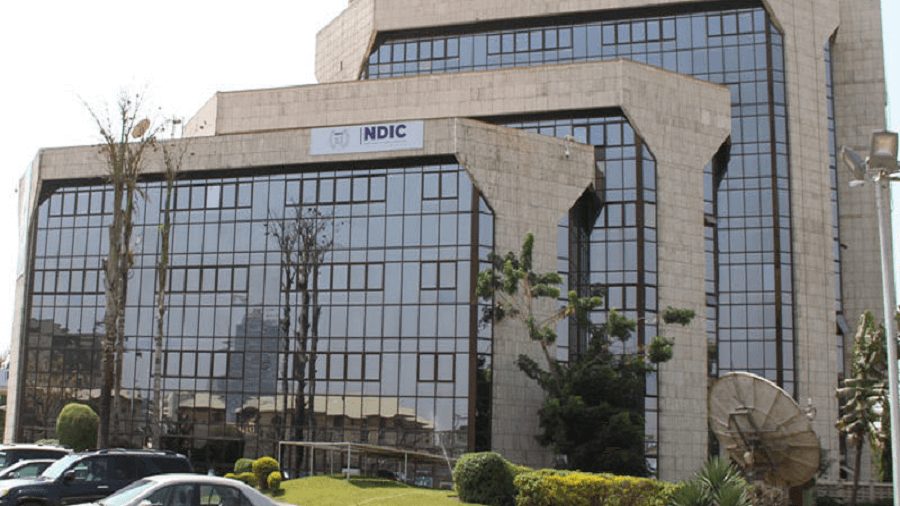
    NDIC calls on estate surveyors to ensure accuracy in failed bank asset valuations

    NDIC calls on estate surveyors to ensure accuracy in failed bank asset valuations

    Top 10 fastest-growing sectors in Nigeria in Q3 2025   

    Top 10 fastest-growing sectors in Nigeria in Q3 2025   

    Nigeria opens bidding for 50 new oil blocks

    Nigeria opens bidding for 50 new oil blocks

    Nairametrics set to host Financial Literacy Webinar for Nigerian students 

    Nairametrics set to host Financial Literacy Webinar for Nigerian students 

    Nigeria’s GDP risis by 3.98% in Q3 2025, driven by strong agricultural and industrial growth 

    Nigeria’s GDP risis by 3.98% in Q3 2025, driven by strong agricultural and industrial growth 

    Zojapay relaunches as Nigeria’s ultimate reward engine for everyday payments 

    Zojapay relaunches as Nigeria’s ultimate reward engine for everyday payments 

    SBM Intelligence rates Nigeria “Critical” on 2025 Instability Risk Index   

    SBM Intelligence rates Nigeria “Critical” on 2025 Instability Risk Index   

    Who the Hell Is Actually Using Facebook Dating?

    Who the Hell Is Actually Using Facebook Dating?

    The Best Cyber Monday Soundbar Deals

    The Best Cyber Monday Soundbar Deals

    The Best Cyber Monday Coffee Deals (2025)

    The Best Cyber Monday Coffee Deals (2025)

    Razer DeathAdder V4 Pro Review: Almost the Perfect Gaming Mouse

    Razer DeathAdder V4 Pro Review: Almost the Perfect Gaming Mouse

    Nintendo Switch 2 Cyber Monday Deals: Bundles, Controllers, Earbuds

    Nintendo Switch 2 Cyber Monday Deals: Bundles, Controllers, Earbuds

    13 Picks of the Best Gaming Mouse, Tested and Reviewed (2025)

    13 Picks of the Best Gaming Mouse, Tested and Reviewed (2025)

    Best Costco Cyber Monday Deals 2025

    Best Costco Cyber Monday Deals 2025

    Ruby Is Not a Serious Programming Language

    Ruby Is Not a Serious Programming Language

    CGI Nigeria convenes board leaders for the Inaugural Directors’ Engagement Series: A conversation on climate governance

    CGI Nigeria convenes board leaders for the Inaugural Directors’ Engagement Series: A conversation on climate governance

    Energy management at home: Practical steps to reduce consumption and save costs 

    Energy management at home: Practical steps to reduce consumption and save costs 

    ICAN: SMEs’ poor documentation may hinder Nigeria’s tax reform success

    ICAN: SMEs’ poor documentation may hinder Nigeria’s tax reform success

    CPPE demands withdrawal of Senate’s proposed excise hike on soft drinks  

    CPPE demands withdrawal of Senate’s proposed excise hike on soft drinks  

    FG urges Nigerians to report VIPs flouting withdrawal of police escorts 

    FG urges Nigerians to report VIPs flouting withdrawal of police escorts 

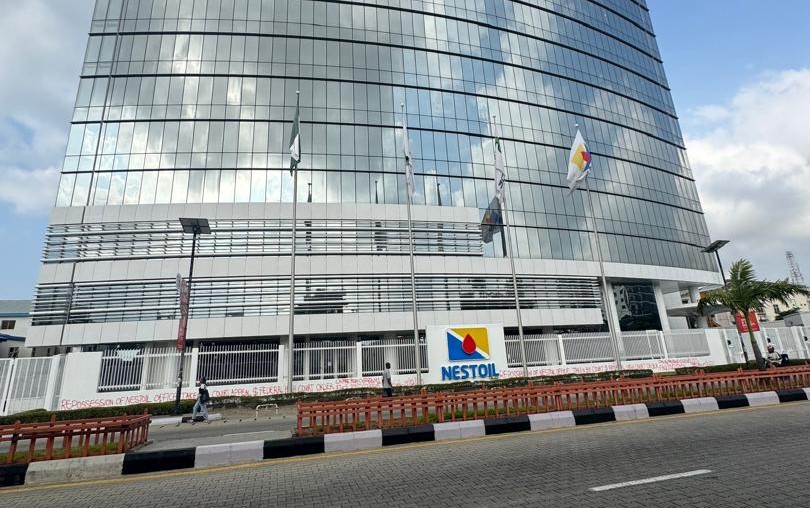
    Appeal Court restrains Nestoil from interrupting FBNQuest’s $1.01 billion debt recovery bid 

    Appeal Court restrains Nestoil from interrupting FBNQuest’s $1.01 billion debt recovery bid 

    The economics of insecurity, CBN rate freeze, and why remote work may be our next export 

    The economics of insecurity, CBN rate freeze, and why remote work may be our next export 

    FBN Quest repossesses Nestoil assets after appeal court ruling

    FBN Quest repossesses Nestoil assets after appeal court ruling

    FCMB named Nigeria’s Best SME-Focused Bank 

    FCMB named Nigeria’s Best SME-Focused Bank 

    Coronation Merchant Bank announces Paul Abiagam as Managing Director/CEO 

    Coronation Merchant Bank announces Paul Abiagam as Managing Director/CEO